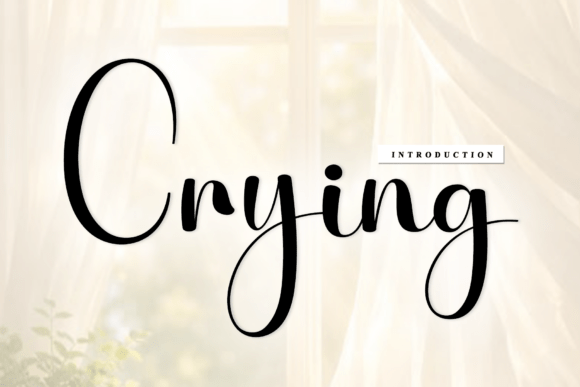
Crying: A Font That Elevates Branding and Creativity Through Artisanal Design
Crying is a sophisticated and rhythmic script font that balances a calligraphic style with a warm, organic aesthetic. Its defining characteristic is the use of sweeping, looping ascenders that create a sense of customized, artisanal artistry. This font is not just a typeface—it's a strategic design choice that can elevate the visual language of your brand or creative project.
Strategic Use of Crying in Branding and Marketing
When considering typography for branding, it's essential to align the visual identity with the core values and personality of the business. Crying offers a unique opportunity to communicate warmth, craftsmanship, and exclusivity. It is particularly well-suited for artisanal food branding, boutique product packaging, upscale lifestyle marketing, and creative editorial titles.
For example, a small-batch chocolate maker might use Crying on their packaging to evoke a sense of handcrafted quality and indulgence. Similarly, a luxury skincare brand could leverage the font's elegant curves to reinforce a message of sophistication and care.
Why Crying Stands Out in a Crowded Market
In today's competitive market, standing out visually is crucial. Crying differentiates itself through its rhythmic flow and artisanal feel. Unlike generic sans-serif or serif fonts, Crying brings a personal touch that resonates with audiences seeking authenticity and emotional connection.
The font's sweeping ascenders and fluid lines give it a dynamic yet refined appearance, making it ideal for headlines, logos, and other high-impact elements. Its versatility allows it to be used across various media, from print to digital, without losing its character.
Planning Your Typography Strategy with Crying
Before incorporating Crying into your design, it's important to consider how it will serve your overall communication goals. Ask yourself: What message do I want to convey? Who is my target audience? How does this font align with my brand’s voice and mission?
A thoughtful approach involves testing Crying against other fonts to see how it performs in different contexts. For instance, pairing it with a clean sans-serif font can create a balanced look that is both stylish and readable. This contrast helps maintain clarity while still expressing creativity.
Practical Examples of Crying in Action
Let's explore a few scenarios where Crying can make a significant impact:
- Artisanal Food Packaging: Use Crying for product names and taglines to emphasize handcrafted quality and attention to detail.
- Boutique Product Labels: Apply the font to labels or promotional materials to highlight uniqueness and bespoke appeal.
- Editorial Titles: Feature Crying in magazine covers or blog headers to add a touch of elegance and artistic flair.
- Lifestyle Marketing: Incorporate it into social media posts or advertisements to evoke a sense of refinement and exclusivity.
Each of these applications demonstrates how Crying can support a strategic communication plan by reinforcing key messages through visual storytelling.
Considerations Before Using Crying
While Crying is a powerful tool, it's not always the right choice. Overuse or misuse can lead to cluttered designs or misaligned messaging. Here are some factors to consider before relying on Crying:
- Readability: Ensure that the font remains legible at all sizes and across different platforms. Avoid using it for long blocks of text where readability is critical.
- Context: Assess whether the font's aesthetic aligns with your brand's tone and audience expectations. A tech startup may find Crying too ornate, while a boutique flower shop would benefit from its elegance.
- Consistency: Maintain consistency in your design system by using Crying alongside complementary fonts and colors that enhance rather than compete with its features.
By carefully evaluating these aspects, you can ensure that Crying enhances rather than detracts from your visual communication strategy.
Risks of Using Crying Without Clear Goals
Using Crying without a clear purpose can result in ineffective or even counterproductive outcomes. For instance, applying it to a minimalist website might clash with the intended design, confusing visitors and diluting the brand message. It's essential to align every design decision with broader strategic objectives.
To avoid such pitfalls, start by defining what you want to achieve with your typography. Is it to attract attention, build trust, or express creativity? Once you have a clear goal, you can select and apply Crying in ways that support those aims.
Intentional Use of Crying for Long-Term Value
Crying is more than a decorative element; it's an integral part of your brand's visual identity. When used intentionally, it can contribute to long-term brand recognition, customer loyalty, and market differentiation.
Consider integrating Crying into your brand guidelines to ensure consistent application across all touchpoints. This includes everything from packaging and advertising to digital content and internal communications. Consistency builds familiarity, which strengthens brand recall and trust.
Decision-Making Guidance for Designers and Marketers
Here are some practical steps to guide your use of Crying:
- Define Objectives: Clarify what you want to achieve with your typography. Does it need to stand out, convey warmth, or reflect professionalism?
- Test in Context: Experiment with Crying in different layouts and sizes to see how it performs in real-world applications.
- Seek Feedback: Gather input from stakeholders, users, or peers to ensure the font aligns with your brand's vision and audience preferences.
- Document Usage: Create clear guidelines for when and how to use Crying, ensuring that everyone involved understands its role in the design system.
These steps help transform Crying from a random choice into a strategic asset that supports your brand's long-term success.
Conclusion
Crying is a versatile and expressive font that can enhance your brand's visual identity when used thoughtfully. By understanding its strengths and limitations, you can make informed decisions that align with your strategic goals. Whether you're launching a new product, rebranding, or refining your marketing materials, Crying offers a compelling way to communicate authenticity, creativity, and quality.