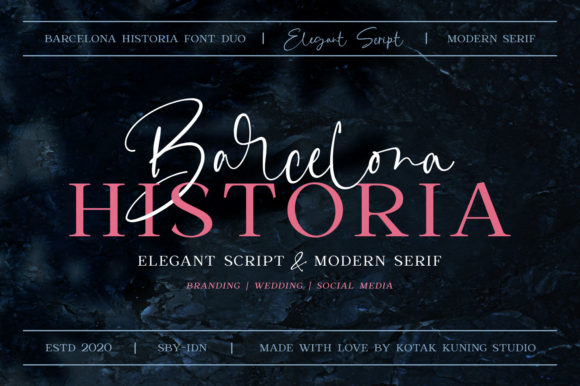
Barcelona Historia: A Font That Merges History and Design
Barcelona Historia is a remarkable font duo that brings together the elegance of serif typography with the expressive charm of script styles. Designed to reflect the rich cultural heritage of Barcelona, this font is more than just a visual element—it's a storytelling tool that can transform any design project into something memorable. Whether you're crafting a brand identity, designing a website, or creating print materials, Barcelona Historia offers a unique blend of sophistication and versatility that can elevate your work to new heights.
The font is PUA encoded, which means it provides easy access to a wide range of glyphs and swashes. This feature allows designers to customize their text with ease, making it possible to create visually striking compositions without the need for complex software or additional tools. The accessibility of these features ensures that even those who are not experts in typography can achieve professional-looking results.
Understanding the Needs Behind Typography Choices
In today's digital landscape, businesses and creatives alike are constantly seeking ways to stand out. A strong visual identity is essential, and typography plays a crucial role in shaping that identity. However, choosing the right font can be challenging. Many designers face issues such as lack of uniqueness, poor readability, or difficulty in finding a font that aligns with their brand's personality.
For instance, a small business owner looking to create a logo may struggle to find a font that reflects both professionalism and creativity. Similarly, a web designer working on a portfolio site might need a font that looks great on screens but also maintains its appeal in print formats. These are common challenges that Barcelona Historia is designed to address.
How Barcelona Historia Addresses Common Challenges
Barcelona Historia solves these challenges by offering a dual font system that combines the clean lines of a serif font with the fluidity of a script style. This combination makes it ideal for a wide variety of applications, from formal documents to artistic projects. The serif component ensures legibility and a sense of tradition, while the script adds a touch of elegance and individuality.
One of the most significant advantages of using Barcelona Historia is its ability to adapt to different contexts. For example, a restaurant looking to create a menu could use the serif version for headings and the script for special promotions or event names. This contrast creates visual interest and helps draw attention to important information.
Additionally, the PUA encoding feature makes it easier for users to access special characters and stylistic variations. This is particularly useful for designers who want to add a unique flair to their work without complicating the design process. Whether you're adding decorative flourishes to a headline or customizing a signature, Barcelona Historia provides the flexibility needed to make your designs stand out.
Practical Applications and Outcomes
Barcelona Historia is not limited to specific industries or design fields. Its versatility makes it suitable for a wide range of creative endeavors. Here are some practical applications where this font can make a real difference:
- Branding and Logos: Use the serif style for logos that require a classic and trustworthy appearance. The script style can be used for taglines or slogans to add a personal touch.
- Web Design: Incorporate the font into website headers, navigation menus, and call-to-action buttons. The combination of serif and script can help create a balanced and aesthetically pleasing layout.
- Print Materials: Use Barcelona Historia for invitations, brochures, and business cards. The font's readability and visual appeal ensure that your printed materials leave a lasting impression.
- Graphic Design Projects: From posters to social media graphics, this font can enhance the overall look of your designs. It works well in both minimalist and bold layouts, depending on how it's used.
By integrating Barcelona Historia into your design workflow, you can achieve a level of professionalism and creativity that sets your work apart. The font's adaptability ensures that it can be used in various ways to meet different design goals.
Tips for Using Barcelona Historia Effectively
To get the most out of Barcelona Historia, consider the following tips:
- Balance is Key: When using both the serif and script styles, ensure that they complement each other rather than compete. Use them in moderation to maintain a cohesive design.
- Test on Different Media: Always check how the font appears on screens and in print. Some fonts look great digitally but may not render as well in physical formats.
- Experiment with Pairings: Try combining Barcelona Historia with other fonts to see what works best for your project. This can help you discover new design possibilities and refine your aesthetic.
- Stay Consistent: Maintain consistency in your use of the font across all design elements. This will help reinforce your brand identity and create a unified visual experience.
These considerations can help you make informed decisions when incorporating Barcelona Historia into your projects. By focusing on balance, consistency, and experimentation, you can unlock the full potential of this versatile font.
Whether you're a seasoned designer or just starting out, Barcelona Historia offers a powerful solution for creating visually compelling designs. Its unique blend of serif and script styles, combined with its user-friendly features, makes it an excellent choice for anyone looking to enhance their creative work. With the right approach, this font can help you achieve outstanding results and bring your ideas to life in a way that resonates with your audience.