Amster: The Bold Brush Script That Transforms Your Creative Projects
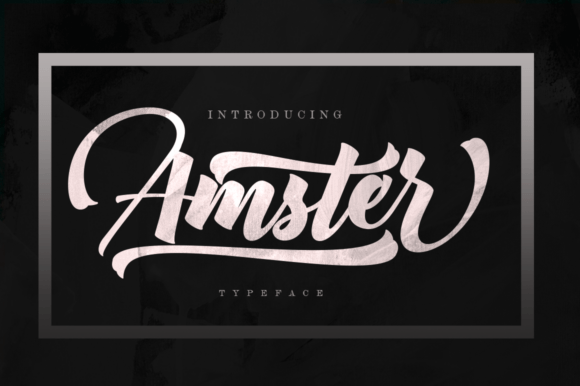
When you are looking for a typeface that commands attention without sacrificing elegance, Amster stands out as a definitive choice. This font is not just another bold brush script; it is a model of modern calligraphy typefaces that perfectly marries the fluidity of hand-written art with the structural integrity required for professional design. Whether you are a graphic designer working on a high-end wedding invitation or a small business owner creating a memorable logo, Amster offers a unique visual identity that feels both personal and polished.
The essence of Amster lies in its ability to mimic the natural flow of a brush while maintaining the precision of digital typography. It captures the energy of a quick, confident stroke, making it an ideal companion for projects that need to convey warmth, creativity, and sophistication simultaneously. Unlike rigid serif or sans-serif fonts, this typeface brings a human touch to your work, ensuring that your message resonates on an emotional level with your audience.
Real-World Applications Across Industries
The versatility of Amster allows it to transcend traditional design boundaries. Its bold yet graceful character makes it suitable for a wide array of industries, each leveraging its unique strengths in different ways. Let's explore how professionals across various sectors are utilizing this font to elevate their visual communication.
- Wedding Invitations and Stationery: One of the most popular uses for Amster is in the realm of weddings. The romantic flair of a brush script pairs beautifully with formal stationery. Designers often use it for the main headline of invitations, creating a focal point that sets a tone of celebration and intimacy. When paired with clean body text, the contrast ensures readability while maintaining that luxurious feel expected at a special event.
- Branding and Logo Design: For startups and established brands alike, a logo needs to be distinctive. Amster serves as an excellent foundation for logos in industries like fashion, beauty, artisanal food products, and lifestyle boutiques. The dynamic strokes suggest movement and personality, helping a brand stand out in a crowded marketplace. A coffee shop might use it for a rustic-chic logo, while a boutique clothing line could employ it to signal trendiness and style.
- T-Shirt and Apparel Graphics: In the world of streetwear and custom apparel, Amster shines brightly. Its bold weight ensures that text remains legible even when printed on fabric, while the brush style adds an artistic edge that appeals to younger demographics. From band merchandise to motivational quotes on t-shirts, the font's energetic nature translates well into wearable art.
- Editorial and News Headlines: While news content often relies on strict grid systems, feature stories and magazine covers benefit from the dramatic flair of Amster. Editors use it to break up dense text blocks and draw the reader's eye to key headlines. The font's ability to look authoritative yet approachable makes it perfect for lifestyle magazines, travel blogs, and cultural publications.
- Labels and Packaging: Product packaging is a critical touchpoint for consumer engagement. Whether you are labeling a batch of handmade soaps, a craft beer bottle, or a gourmet food jar, Amster adds a layer of premium quality. The font suggests that the product inside is crafted with care, much like the lettering itself.
- Posters and Event Badges: For concerts, festivals, or corporate events, posters need to grab attention from a distance. The bold strokes of Amster ensure visibility, while the stylistic variations keep the design from feeling generic. Event badges and tickets also benefit from this aesthetic, turning functional items into collectible keepsakes.
Unlocking the Full Potential with OpenType Features
What truly separates Amster from standard brush fonts is its robust support for advanced typographic features. These capabilities allow designers to achieve a level of authenticity that mimics real calligraphy writing styles. By utilizing Contextual Alternates, the font automatically selects the best glyph variant based on the surrounding letters, ensuring smooth transitions between strokes that look naturally connected rather than mechanically joined.
In addition to contextual alternates, the inclusion of Standard Ligatures helps prevent awkward spacing between specific letter combinations, creating a cohesive flow. However, the real magic happens with Stylistic Alternates and Stylistic Sets. These features give you the freedom to swap out specific characters for alternative designs, adding variety and preventing repetition in long texts. Imagine designing a large poster where every "e" looks slightly different, adding a hand-crafted charm that static fonts simply cannot replicate.
To access these powerful features, you will need software that supports OpenType standards. Programs such as Adobe Illustrator CS, Adobe InDesign, and CorelDraw X6-X7 are essential tools for unlocking the full potential of Amster. Once opened in these applications, you can easily toggle through the stylistic sets via the Character panel or Glyphs palette, experimenting until you find the perfect combination for your layout.
Bridging Language Barriers with Universal Support
A significant advantage of choosing Amster is its extensive language support. Designed with a comprehensive character set, it accommodates a vast majority of European languages based on the Latin alphabet. This inclusivity means you can maintain a consistent visual identity across international campaigns without needing to switch typefaces.
The supported languages include English, French, German, Spanish, Italian, Portuguese, and many others. Specifically, it handles the unique diacritics and characters required by Breton, Catalan, Czech, Danish, Estonian, Hungarian, Icelandic, Latvian, Lithuanian, Norwegian, Polish, Romanian, Scottish Gaelic, Slovak, Slovenian, Swedish, Turkish, and Welsh. This broad compatibility makes Amster an invaluable resource for global brands, multilingual organizations, and designers working on diverse projects that require authentic representation of local dialects.
Practical Considerations for Implementation
While Amster is a powerful tool, successful implementation requires thoughtful planning. Because it is a display font characterized by its bold brush strokes, it is generally not recommended for long paragraphs of body text. The intricate details and varying stroke widths can reduce readability when used in small sizes or over extended lengths. Instead, reserve Amster for headlines, subheadings, captions, and short phrases where impact is paramount.
Another consideration is the file format. The package includes both OTF (OpenType) and TTF (TrueType) versions, giving you flexibility depending on your workflow. If you are working in a web environment that does not fully support OpenType features, the TTF version provides a reliable fallback, though you may lose access to some of the stylistic alternates. Always test your files across different platforms to ensure the font renders correctly on all devices.
Furthermore, pairing Amster with complementary typefaces is crucial for balanced design. Since Amster is visually dominant, it works best when contrasted with simple, neutral sans-serif or serif fonts. This contrast ensures that the hierarchy of information remains clear, allowing the brush script to shine as the star while the supporting text provides necessary context without competing for attention.
Ultimately, Amster represents a fusion of artistic expression and technical precision. It empowers creators to inject personality into their work, whether they are crafting a bespoke wedding suite or launching a new product line. By understanding its strengths and limitations, and by leveraging its advanced OpenType features, you can create designs that are not only beautiful but also effective in communicating your unique story.