Rainbow Island Font: A Versatile Duo for Creative Designers
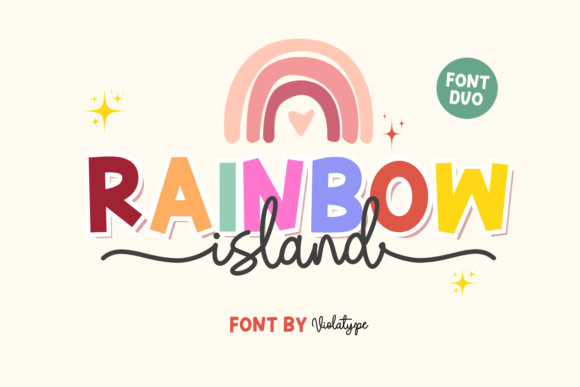
Rainbow Island is a unique font duo that combines a sans-serif and a script typeface, offering designers a flexible pairing for a wide range of creative projects. This font set is designed to enhance visual appeal while providing practical features such as ligatures, alternates, and multilingual support. Whether you're working on branding, digital content, or print media, Rainbow Island can be a valuable addition to your design toolkit.
What Is Rainbow Island?
Rainbow Island consists of two complementary fonts: one sans-serif and one script. The sans-serif variant provides clean, modern lines suitable for headings and body text, while the script font adds a touch of elegance and whimsy, ideal for logos, invitations, or decorative elements. Together, they form a cohesive pair that works well in both minimalist and playful design styles.
One of the standout features of Rainbow Island is its extensive collection of ligatures and alternates. These special characters allow for more expressive typography, helping to create unique and eye-catching designs without requiring advanced typographic skills. Additionally, the font supports over 90 languages, making it a versatile choice for international projects.
Why Consider Rainbow Island?
If you're looking for a font that balances functionality with creativity, Rainbow Island may be an excellent option. Its dual-typeface structure allows for greater flexibility in design, enabling you to mix and match styles to suit different elements of your project. This makes it particularly useful for designers who want to add visual interest without complicating their workflow.
The availability of 10 boho-style rainbow images further enhances the aesthetic potential of Rainbow Island. These high-quality visuals can be used to complement text-based designs, adding a vibrant and artistic touch that aligns with bohemian or nature-inspired themes. This combination of font and imagery can help create cohesive, visually appealing compositions that stand out in a crowded design landscape.
Benefits and Tradeoffs
The primary benefit of using Rainbow Island is its versatility. The pairing of a sans-serif and script font offers a broad range of stylistic options, making it suitable for various design contexts—from web pages to print materials. The inclusion of ligatures and alternates also adds a layer of customization, allowing designers to fine-tune their typography for maximum impact.
However, there are some considerations to keep in mind. While the script font is expressive, it may not be the best choice for long blocks of text due to its ornate style. Similarly, the sans-serif variant, though clean, may lack the personality needed for highly stylized projects. Designers should evaluate whether these characteristics align with their specific needs before committing to Rainbow Island.
Another factor to consider is the learning curve associated with using ligatures and alternates. While they offer creative possibilities, they require some familiarity with font features and may take time to master. For users who prioritize simplicity, this could be a drawback.
Situations Where Rainbow Island Excels
Rainbow Island is particularly well-suited for projects that benefit from a blend of modern and organic aesthetics. It works exceptionally well in branding for lifestyle, wellness, or creative industries where a bohemian or colorful vibe is desired. The font's compatibility with boho rainbows also makes it ideal for social media graphics, greeting cards, and event invitations that aim to convey a sense of playfulness and individuality.
Additionally, the multilingual support makes Rainbow Island a strong candidate for global marketing campaigns or content that targets diverse audiences. Its adaptability ensures that it can maintain consistency across different languages and regions, which is essential for international design work.
When Alternatives Might Be Better
While Rainbow Island has many strengths, it may not be the best fit for every project. For instance, if you need a font that is primarily focused on readability in large amounts of text, a single sans-serif or serif font might be more appropriate. In such cases, alternatives like Helvetica, Arial, or Georgia could provide a cleaner, more straightforward solution.
Similarly, if your design requires a highly formal or professional tone, the script component of Rainbow Island may not be suitable. Fonts like Times New Roman or Garamond, which are traditionally associated with academic or corporate settings, could be better choices in those situations.
Practical Insights for Decision-Making
Before choosing Rainbow Island, consider the purpose of your design and the message you want to convey. If your goal is to create something visually engaging and unique, then this font duo could be an excellent fit. However, if clarity and simplicity are your top priorities, you may want to explore other options.
It's also worth testing Rainbow Island in real-world scenarios to see how it performs in different contexts. Experimenting with the ligatures and alternates can help you understand how much customization you can achieve and whether it meets your expectations. Additionally, reviewing the available boho rainbow images will give you a clearer idea of how they integrate with your design vision.
Ultimately, the decision to use Rainbow Island should be based on a careful evaluation of its features against your specific design goals. By considering both the benefits and limitations, you can determine whether this font duo is the right choice for your next project.