Queen Land: The Epitome of Elegance in Script Font Form
In the crowded digital landscape, where generic sans-serifs and standard typefaces dominate screens, finding a font that commands attention without shouting is a delicate art. Queen Land emerges not just as another script typeface, but as a meticulously crafted solution for those who understand that typography is the voice of visual identity. This sophisticated font forms the backbone of diverse design scenarios, blending modern aesthetics with timeless grace. Whether you are a small business owner crafting a brand identity or a marketer designing an invitation suite, Queen Land offers a level of refinement that elevates your work from functional to artistic.
However, possessing a beautiful tool does not guarantee a masterpiece. Many designers and creators rush into using script fonts like Queen Land without fully grasping their nuances, leading to results that feel disjointed or unprofessional. Before you download or purchase this versatile asset, it is crucial to understand how to wield its power correctly. Let us explore what makes this font special and, more importantly, how to avoid common pitfalls that can undermine your design efforts.
Understanding the Character of Queen Land
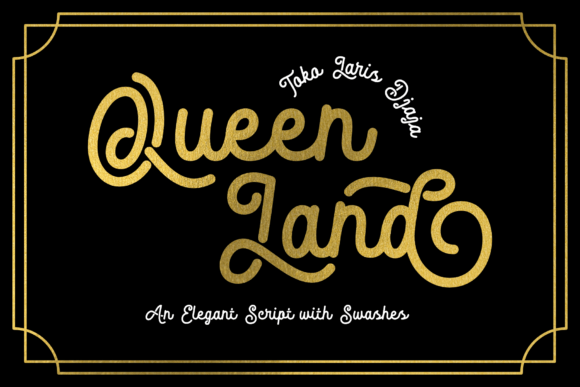
Queen Land is designed to be the epitome of elegance in script font form. It boasts a multitude of swash features, deftly built to elevate your typography, thus infusing an individualistic and artistic charm into each venture. Unlike rigid block letters, this typeface flows with intention. The ligatures connect naturally, mimicking the fluid motion of high-end calligraphy while maintaining the legibility required for modern applications.
When you integrate Queen Land into logos, branding, invitations, packaging, or other innovative ventures, you are choosing a partner that speaks of sophistication. It is not merely decorative; it is structural. A well-placed header in Queen Land can anchor a layout, while subtle accents in body text can add personality. The key lies in recognizing that this font is built for specific moments where emotion and style must take precedence over raw data transmission.
Common Pitfalls in Selection and Usage
Even experienced professionals sometimes stumble when introducing a new script family into their workflow. One of the most frequent errors is assuming that "elegant" means "readable at any size." While Queen Land is robust, script fonts generally lose their character when scaled too small. If you attempt to use this font for fine print on a product label or a dense paragraph of legal text, the intricate swashes may blur together, creating a muddy appearance that frustrates the reader rather than delighting them.
The Consequence: When legibility suffers, the message is lost. A customer scanning a menu or a flyer might skip over the text entirely if they cannot decipher the words quickly. This leads to poor user experience and a potential loss of engagement. To avoid this, reserve Queen Land for headlines, titles, short phrases, and accent elements. Use clean, neutral sans-serif or serif fonts for supporting body copy to create a balanced hierarchy.
Another significant misunderstanding involves the misuse of kerning and spacing. Because script fonts have variable stroke widths and connecting lines, they often require tighter tracking (letter-spacing) than block fonts. However, beginners often leave the default spacing, which can make the letters look cramped or, conversely, disconnected. In the case of Queen Land, the internal spacing is pre-optimized, but manual adjustments are sometimes necessary depending on the context.
Evaluating Compatibility and Context
Before you commit to using Queen Land for a major project, you must evaluate how it interacts with the rest of your design system. A common mistake is pairing an ornate script with another decorative typeface. For instance, combining Queen Land with a highly stylized serif or a competing script creates visual competition. The result is often chaotic and lacks focus.
Better Approach: Treat Queen Land as the star of the show. Pair it with understated, neutral typefaces. A simple geometric sans-serif works beautifully alongside the flowing curves of Queen Land, allowing the script to shine without distraction. This contrast highlights the unique swash features of the font and ensures that the overall composition remains harmonious.
Furthermore, consider the medium of delivery. A font that looks stunning on a high-resolution screen or printed cardstock might behave differently on low-resolution mobile displays or textured packaging materials. The thin strokes in some of the Queen Land glyphs may disappear on older devices or when printed on rough paper textures. Always test your designs across different mediums before finalizing the output.
Technical Considerations for Professionals
For freelancers and agencies managing multiple clients, licensing and file management are critical. Some users overlook the specific license terms associated with premium fonts, assuming a personal use license covers commercial branding projects. Using Queen Land in a client's logo without the proper commercial rights can lead to legal complications and financial penalties. Always verify the scope of your license—whether it covers web usage, merchandise, or broadcast media—before starting the creative process.
Additionally, do not neglect the feature set. Queen Land is not just a static collection of letters; it is a dynamic toolkit. It includes alternate characters, ligatures, and stylistic sets that allow for endless variation. A common oversight is ignoring these OpenType features. By sticking to the default glyph set, you miss out on the opportunity to customize the flow of the text. For example, swapping a standard 'f' for a swash variant can change the entire rhythm of a word. Take the time to explore the font panel in your design software to unlock these hidden potentials.
Making the Right Decision for Your Project
Choosing the right typeface is about alignment with your goals. If your objective is to convey speed, efficiency, or modern minimalism, Queen Land might not be the primary choice. However, if you aim to evoke luxury, romance, heritage, or artistic flair, this font is an ideal candidate. Be honest about the emotional tone you wish to communicate.
When evaluating Queen Land, check the following criteria:
- Ligature Quality: Ensure the connections between letters look natural and do not create awkward shapes.
- Swash Consistency: Verify that the decorative flourishes are consistent in weight and style throughout the alphabet.
- Vocal Range: Test the font with various names and phrases to ensure it handles both short and long strings of text gracefully.
- File Integrity: Confirm that the font files are complete and free of corruption to prevent rendering issues later.
By approaching Queen Land with respect for its design intent and a clear understanding of its limitations, you can avoid costly mistakes. The goal is not just to use a "pretty" font, but to leverage its capabilities to tell a compelling story. Whether you are launching a new boutique, designing wedding stationery, or rebranding a lifestyle blog, Queen Land provides the sophisticated foundation you need.
Remember, great design is often defined by what you choose not to do. Restraint, combined with the right tools, yields the most powerful results. Let Queen Land bring its individualistic and artistic charm to your next venture, ensuring that every letter placed is deliberate, elegant, and effective.